10:30AM, Monday 18 December 2023

TIME was when academics locked themselves away in their ivory towers, only sharing their knowledge with a small circle of fellow experts.
Nowadays, fortunately, professors of all kinds of subjects are willing and in fact keen to share their discoveries and ideas in such a way that the people who can really make a difference (i.e. us, the general public) understand and can act upon their new- found knowledge.
Many books written by experts on their subjects are entertaining as well as informative — some even make you laugh out loud. Ted talks online are short public lectures that are so good at getting across ideas in succinct and understandable ways.
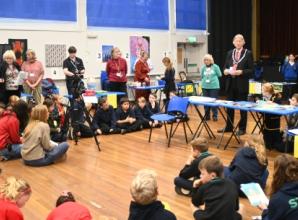
Sometimes these creative innovators come to Henley and give public talks to help us understand the world as it is. Such was the recent talk at Café Scientifique Henley, called “Climate change: what now, what next?” given by Chris Merchant, meteorologist and professor in ocean and earth observation at Reading University.
He and his research team use billions of pieces of data recorded from space to track what is actually happening to the oceans and earth. What was particularly good about this talk was that it was delivered in a straightforward way that everyone could understand with interesting visuals.
He showed that the oceans are warming by one tenth of a degree every 10 years or so. Before two degrees warming coral reefs will bleach and die, affecting the 100 million people who depend on them for fish. These findings are stark but it’s up to us to encourage our government to limit the temperature increase to 1.5 degrees, as per the Paris Agreement it signed up to.
Although the venue for this talk was packed with interested people, there were more who wanted to attend, so Greener Henley has asked Chris to return for another public lecture during Great Big Green Week in June. Come along — he’s a good speaker and his message is serious but positive.
ANOTHER inspiring professor is Kate Raworth, from Oxford, who is behind the idea of “doughnut economics”, which is clearly demonstrated in her Ted talk, “A healthy economy should be designed to thrive, not grow”. Several cities around the world have experimented in using this framework successfully.
Last month the Oxfordshire Doughnut Economics Collective was launched with a workshop in Oxford. This was over-subscribed by 80 people but I managed to attend the follow-up webinar. Did you know that Oxford is the second most unequal city in the country with 25 per cent child poverty?
The idea of doughnut economics is that everyone should be able to live in a safe and just space where everyone’s needs can be met within the limits of our living planet.
The graphic above shows why it’s called a doughnut. We don’t want anyone to fall below the basic needs to be able to thrive, nor do we want to overshoot the planetary limit by breaking the ecological ceiling.
If you are interested in finding out more, have a look at www.oxfordshiredoughnut.org.uk
AS we are in the season of goodwill, it might be apt to think about what that really means. Starting with the circular economy of Henley, please use our local shops, especially our independent traders. They need our custom to survive.
Henley is also well-served for charity shops where you are spoilt for choice with pre-owned and new items.
Challenge yourself to avoid single use plastic and over-packaging if at all possible.
If you really want to get away from the shopping bonanza think about your loved ones and the happiest times you have spent with them. Maybe you have a skill you could use or share with them to make something they really want. My family are quite good at making home-made things, jams, bird tables etc.
One of the nicest things is to give promise vouchers — you could promise to clean your granny’s windows, babysit for your niece, or cook for someone. Your time and love is the most valuable thing you can give to anyone at Christmas or any other time.
Diana Barnett
Most read

Amanda Stewart's cracked tyre due to pothole damage
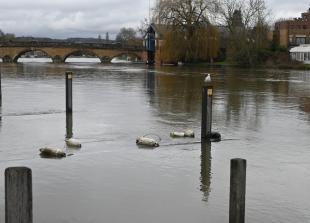
High river levels around Henley Bridge
Top Articles

A MAN from Henley was arrested on suspicion of murder on Sunday after a man was seriously injured in Dorset and later died in hospital.
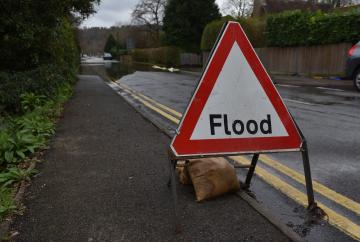
Stock image
Flood warnings are in place on stretches of the River Thames following a period of heavy rainfall.

New look: a computer generated image of an enlarged fitness centre and spa at Phyllis Court
A PRIVATE members’ club in Henley has submitted plans to expand its spa fitness centre. Phyllis Court Club in Marlow Road said it needs the extra space to meet growing demand.
© Copyright 2024 Baylis Community Media CIC All right reserved