10:30AM, Monday 26 April 2021
Depressing development
I found your lead news item on the proposed development off the Fair Mile (Standard, April 16) so depressing. How could this be allowed to happen?
A development of houses and flats of no particular architectural merit in a largely conservation area. Perhaps the slow worms might give time for reflection and a rethink?
My long years as a founder member of powerful lobbying Marlow Society have shown just what can be achieved, from the saving of the iconic Marlow suspension bridge to the brewery development in the centre of Marlow. This is now a maze of curving streets with houses of traditional local brick and flint or finished in plain plaster. Density has been achieved but not at the cost of character.
The Fair Mile is surely Henley’s stateliest and most beautiful entry to the proud town of Henley. Surely, if there is to be further development of the back fields, it should be one of character? It could perhaps mirror the way the characterful area that is Hop Gardens, built all those years ago and still a desirable place to live and visit. Or it could be a Prince Charles-inspired Poundbury type development of character and interest.
Is there no way that this can be lobbied for? Henley deserves better. — Yours faithfully,
Jean Garon
Henley
What about glow worms?
Sir, — I read with interest in last week’s Henley Standard about how slow worms may be moved from the verge to make way for the housing development along the Fair Mile.
I wondered if they would be taking similar measures with the glow worms that can also be found along the Fair Mile. I also wonder if an environmental impact assessment has been carried out on the effect of the housing development on the glow worm population.
Glow worms are becoming increasingly scarce and the Fair Mile is one of the few places in the area where I have seen them. They are usually seen on a warm summer night between mid-June and mid-August. They are much rarer than slow worms and no relation.
It would be interesting to know if any survey has been carried out on the field where the housing is proposed, to find out if there is a glow worm population there. It is an ideal habitat for them as the grass there tends to get quite long and it is quite scrubby. If they are there, where would the council move them to?
I am afraid that light pollution and loss of habitat may well spell the end for the glow worm population in the area. — Yours faithfully,
Mark Alliston
Park Corner, Henley
Fly-tipping made easy
Sir, — I totally agree with the comments made by Robert Watson (Standard, April 16) headlined “Let’s stop fly-tipping”. I, too, am totally against this.
You may sense a “but” is coming and you would be correct. Recently, my lounge was redecorated leaving us with an amount of debris which we bagged to take to the Oakley Wood dump along with a few other items. Upon arrival we discovered they don’t take builders’ rubble but do take wood.
Our wood would have cost us £1.50 but you can only pay by credit card (covid reasons), which we did not know and we only had cash. However, a trio of tables covered in leather and glass could be left at no charge.
To get rid of our rubble necessitated a trip to another dump in Oxford (Redbridge). To do this meant we had to drive back to Henley, pick up a credit card, drive to Oxford and pay whatever the charge to leave our rubble, then drive back to Henley.
Not only would this be costly in time but it was hardly an eco-friendly thing to do, if only for the amount of driving involved. Fortunately, when we got home, we found a local skip and resolved our problem.
As we left Oakley Wood my wife and I agreed that people may fly-tip because of the difficulty in the disposing of rubbish in the correct manner.
The operatives at Oakley Wood cannot be blamed but somehow it has to become easier to get rid of rubbish rather than drive around the county trying to find the
correct place. There is also the cost factor and not everyone can afford to pay.
I fear that unless councils make this easier, fly-tipping will just increase. — Yours faithfully,
Chris Baker
Lauds Close, Henley
Car batteries are too heavy
Editor, — I support Mr Reid of Shiplake (Standard, April 9) and I would like to offer a few more reasons why electric cars are not currently such a good idea.
The weight of an electric vehicle’s lithium battery is considerable, with Tesla Model S, for example, being 540kg with a combined kerb weight of the car 2,000kg, the Nissan Leaf 303kg with combined weight 1,600kg compared with the average family car such as an Astra coming in at around 1,200kg.
How can this be efficient when compared to the average 20kg weight of fuel that a petrol/diesel car would have on board.
As well as wasting a large proportion of energy having to move this large battery weight around, it must have an adverse effect on safety with the associated increased stopping distance and increased kinetic energy that the vehicle has.
Another reason is the risk of the lithium battery being damaged in a collision. Thermal runaway leads to ignition, or in some cases even explosion. Lithium battery fires release some incredibly toxic gases including hydrogen cyanide which require special handling by fire services.
My main point is in response to Mr Watson’s letter (Standard, April 16) stating that electric cars are not running mainly on fossil generated electricity and that most charging points are powered by renewables. This is simply wrong. The electricity that comes via the National Grid is generated by a combination of prevailing sources. How you decide to pay for it or how environmentally conscious you are does not change that fact.
At the time of writing this, only 2.8 per cent of the UK’s power is currently being generated by wind, 4.2 per cent by coal and 63 per cent by gas. For the whole of this week all sources of renewable energy have made up a very small proportion of the UK’s electricity supply. http://www.gridwatch.templar.co.uk/
Once we have all been forced to switch to electric vehicles, how we then power them all is going to be interesting to see. — Yours faithfully,
Howard Wiblin
Elizabeth Road, Henley
Electric is impractical
Sir, — I don't think David Watson (Standard, April 16) has realised all the shortcomings of electric cars. I like to holiday in the Scottish Highlands, North Yorkshire Moors, and rural Wales. There are no charging points there.
On a motorway, in winter, with the heater and lights on, there is a real risk of running out of power in a traffic jam. In very cold weather, in hilly areas, with the car loaded, the advertised range would be halved. You can’t change the laws of physics, and the fact is that the power to weight ratio of batteries means electric cars will never have a useful range, and the lack of charging facilities outside of the main conurbations makes them totally impractical.
Even here in Henley the location of chargers is a closely guarded secret. I think there are two in the Kings Road car park, and another at Badgemore Golf Club, and that's about it. — Yours faithfully,
Adrian Vanheems
Baskerville Road,
Sonning Common
No simple answers
Electric car, the simple answer? Apparently David Watson thinks so (Standard, April 16) Perhaps he can afford an electric car (they don’t come cheap) and maybe he has somewhere to plug in and recharge it.
But where are the millions of people in Britain today who live in flats, tower blocks and terrace properties with no off-road parking supposed to charge electric cars?
Running power cables across footpaths for hours at a time would be a safety hazard for pedestrians and would be, I suspect, illegal.
Perhaps, in his next lecture to us, Mr Watson can provide the simple answer? — Yours faithfully,
Michael Welfare
Binfield Heath
Switching doesn’t save
In his arguments regarding electric cars, David Watson (Standard April 16) is conflating an accounting exercise with physical reality. It does not matter which electricity company is paid for the power consumed; the reality is that the power used will still come from the mix provided on the National Grid.
The electricity consumed by electric cars will not have been derived from a renewable energy source, but will be, almost exclusively, generated from fossil fuels and nuclear.
As I write this letter, just 5.5 per cent of all power on the UK National Grid is coming from wind energy, as it has done for most of the last few weeks.
In addition, wind energy is massively subsidised. For example, the Moray Firth offshore wind farm, which cost nearly £2 billion to build, has published its accounts that show that £280 million, i.e. 75 per cent, of its income came in the form of subsidies, via “difference compensation payments”, not electricity sales. This will continue year after year and will be multiplied by other offshore wind-farms, such as Hornsey 1, that will soon come online.
Mr Watson’s information regarding CO2 as plant food is totally wrong. In fact, CO2 at current levels and higher, enables plants, trees, and crops to grow faster and to use less water, which has increased the proportion of the world that can produce crops. In fact, users of commercial greenhouses, commonly use CO2 generators to maximise production.
Despite what he says, there is no evidence to support his claims about extreme weather events, allegedly caused by increased CO2 (the Intergovernmental Panel on Climate Change admits this in its latest reports), nor any connection whatsoever to flooding in Shiplake.
It is interesting that he says, quite rightly, that weather (or did he mean climate?) is chaotic and hard to forecast. But it does not seem to deter climate computer modellers, with their dire warnings, from doing so and getting it wrong year after year.
I used the example of diesel cars to illustrate how the green lobby and the politicians who listen to them, always get it wrong.
You may recall the 2015 “dieselgate” scandal involving the fraudulent testing of diesel vehicle exhausts, which led to the greens’ switch from love to demonisation of diesel vehicles. Despite what he says, even modern diesel engines do still produce nitrous oxides.
Regarding the comparison I made between the cost of gas and electricity, he misses the point. What it illustrates is the inefficiencies involved in turning a gas into electricity and transporting it to the end user.
The fact that electricity costs three to four times that of gas, makes the 50 per cent fuel efficiency of a petrol driven car pretty impressive.
No, you don’t save CO2 and nitrous oxides when you switch (if you can afford it) to an electric car. Apart from everything else, an awful lot of CO2 and genuine pollution will have been generated in its manufacture and that of its batteries. — Yours faithfully
M Reid
Shiplake
Traffic plan revisited
Editor, — Paul Fairweather raises an interesting and pertinent question about relocating the traffic lights from the west side to the east side of Henley Bridge (Standard, April 16).
This suggestion was made as a component of a submission to the Henley Traffic Competition (1993). The object being to improve the environment for pedestrians crossing the bridge (single track road and wider pavements).
The idea was raised during the Buchanan Transport Study (reporting 1997) but was rejected as it would slow down traffic over the bridge. (Tolling of Henley Bridge was Buchanan’s preferred option).
Over the years we have raised the option informally and periodically with both Henley and Remenham communities. Although Remenham overall has not been that in favour (queuing traffic on bridge displaced into Remenham), I have received some individual signs of interest.
In regard to Henley, within the last couple of years, I have drawn attention to various folk, who have interests in the environment, of this option and that it should be re-visited.
Maybe Mr Fairweather has fired the gun for this
re-visit, given the greater interest today in environmental matters than twenty five or so years ago. — Yours faithfully,
Ian Giuliani
Henley
Moving lights is bright idea
Sir, — I write in support of Paul Fairweather's letter (Standard, April 16).
He suggests moving the traffic lights back off the bridge and then lists a number of benefits that this action would deliver.
What a good idea! Now, who do we contact to move this excellent idea along?
Without constant pressure on “the powers that be” to do something, nothing will get done as usual. And it will get quietly buried as did the solutions last year regarding the death trap known as the “dual carriageway race track” cutting through Bix on the A4130 towards Nettlebed.
These two suggestions no doubt won’t be able to compete with the multi- discussions on whether we buy new rubbish bins for the town versus painting the old ones. — Yours faithfully,
Richard Taylor
Bix
Signs would be useful
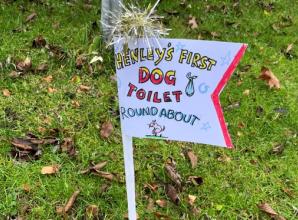
Sir, — Councillors Sarah Miller, Kellie Hinton and Laurence Plant seem to be missing the point when they say that people would not obey a rule that would require dogs to be on leads in Mill Meadows (Standard, April 16).
Just because some people do not like a rule and choose to ignore it does not mean it is not a good idea.
A few additional signs on the meadows might encourage some to comply and would enable walkers to point out the signs and ask for a dog to be put on a lead.
Unfortunately, what some see as their right to freedom means that they remove the freedom of others to walk on Mill Meadows without getting dog poo on themselves or their children. — Yours faithfully,
Melanie White
Emmer Green
Be proud of our red kites
Sir, — I have been dismayed recently at a number of letters in the Henley Standard saying there are too many red kites and that, in some cases, they should be culled.
The red kite is a threatened species worldwide and here in the UK we have a very important proportion of the world’s population. As a result, the bird is protected by law.
Red kites are mainly scavengers but do sometimes take the chicks of other birds. This, however, is mainly due to the fact that so much natural habitat for our wild birds has been lost that they now tend to be concentrated in areas where they can survive and breed. Those concentrations
naturally attract predators.
We need to apply some intelligence to addressing any issues of the red kite reintroduction success and not fall back on intolerance and the Victorian attitude of killing any creature that is perceived as being in our way.
We should celebrate the success of the magnificent red kite and be proud of it here in the Chilterns and not generate an atmosphere of intolerance towards it. — Yours faithfully,
Adam Parfitt
Elizabeth Road, Henley
Leave wild birds alone
Sir, — To the people complaining about and wanting to destroy the beautiful red kites (Standard, April 16), I suggest they go to Italy and listen and look at the wild birds. There aren’t any. Because they are all shot.
If these people are so afraid of a beautiful wild bird, I suggest they stay in their armchairs.
Red kites were reintroduced in the Chilterns and are flourishing.
We have amazing wild birds that bring joy and happiness. Don’t blow it, — Yours faithfully,
Chris Gray
Chiltern Manor, Wargrave
I want pub to succeed
Sir, — I would like to take this opportunity to clarify some points regarding the White Lion at Crays Pond.
To date, the individuals that act for the Save the White Lion group have not made any offers to purchase the pub.
They have viewed the property several times and commissioned a professional valuation, which they are unwilling to share.
Even after seven years, they have provided no cashflow projections or profit and loss projection.
Indeed, they have not formulated a plan on how they could run the premises as a public house.
They have blamed poor management by previous tenants for the failure of the White Lion and have taken no account of the current and past difficulties that face landlords that have resulted in the closure of other pubs in the immediate area.
I have offered a rent-free period to anyone with serious plans to operate the pub but have had no takers.
In order to subsidise the public house operation to create a long-term viable business, I have previously submitted plans to retain and invest in the White Lion by creating a bed and breakfast unit with family housing.
However, these plans were not supported by the action group, despite the fact that this formula has been successfully adopted to retain other pubs in the area.
The group has conducted several surveys within the community of Crays Pond.
However, the last survey was restricted to a selective group rather than all the residents. The group has not shared the results even of this selective survey.
I remain more than happy to speak to local residents or the council.
I would appreciate any ideas for establishing a successful business that provides a socially inclusive environment providing for everyone in the community.
You can email me at lioncrayspond@gmail.com — Yours faithfully,
Satwinder Sandhu
Owner, White Lion, Crays Pond
Good news on HGVs
I would like to record my pleasure in seeing Oxfordshire County Council approve the town’s motion to plan to greatly reduce the number of large heavy goods vehicles passing through our town.
These intimidating vehicles do not fit kindly with market towns in Oxfordshire and I believe the road haulage industry should look carefully on what damage they do to buildings, to traffic queues and to pollution.
The residents of Henley have spoken. It was been a pleasure to work alongside Amanda Chumas and Stefan Gawrysiak with the team on a thorough and well thought through campaign.
It deserved its success and has got it. — Yours faithfully,
David Dickie
Clean Air for Henley
Elizabeth Road, Henley
Now hard work begins
Sir, — On behalf of Henley HGV Watch, we are encouraged by the cross-party support at Oxfordshire County Council for the HGV weight limit motion presented by our county councillor Stefan Gawrysiak and we hope this bodes well for the ongoing process.
We are grateful the subject is finally off the ground and now the hard work begins for which we shall need the continued support of our strong resident led group here in Henley.
Over the coming weeks we shall be making contact with everyone who signed the hard copy petition with details of how you can continue to support, particularly during the consultation process.
We would ask that anyone who wishes to pledge their support to email us at henleyhgvwatch@gmail.com or by letter to 9 Baronsmead, RG9 2DL or call 07774 962888. With thanks to everyone involved. — Yours faithfully,
Helen Gaynor
Admin support, Henley HGV Watch
Use lead in countryside
Sir, — Our member, farmer David Hicks, wishes to clarify matters relating to the incident where a dog was shot on his farm (Standard, April 16).
The dog owner’s assertion that there were no sheep in the field is not correct, according to Mr Hicks. On April 5, Mr Hicks was about to check his sheep. He was talking to three metal detectorists when he noticed his sheep in the next field running in a huddle. He spotted a black dog that had singled one sheep out and the dog was biting her in the corner of the field — there are still signs of wool there from the attack.
Mr Hicks ran towards the dog shouting — it looked up and he shot it. The field corner in which the sheep was attacked is 300m away from the public footpath.
The owner, who had not been in sight before, came to the scene and there was an exchange. The flock was then gathered to be checked over. The in-lamb ewe was so badly injured that despite treatment she died that evening.
The three men metal detecting all witnessed the events, according to Mr Hicks, and all said they would write statements regarding the dog attacking the sheep, if needed.
There are signs at both ends of the footpath by the kissing gates, stating all dogs must be kept under control.
A fortnight earlier, we understand that a police community support officer had leafleted the village urging people to keep dogs under control near livestock.
It is not always practical or affordable for livestock farmers to fence off the entire length of a footpath.
This incident is highly regrettable for those involved. We’d simply urge all dog owners to keep their dogs on a short lead around sheep, given the law allows farmers to shoot dogs that are threatening or attacking farm animals.
All too often sheep, in particular, end up being killed or horribly mutilated by out-of-control pet dogs that turn wolf. If chased, sheep can die of stress and exhaustion. So please, dog owners, do all you can to avoid further animal welfare issues and tragedies.
Please use a lead when walking in the countryside as livestock may be around the corner. — Yours faithfully,
Isobel Bretherton
NFU South East
Shocked and appalled
I was shocked to read your report of the £1.6m loss incurred by the Conservative led Oxfordshire County Council for failing to follow its procurement process correctly.
Even more shocking was the failure by Councillor David Bartholomew (cabinet member for finance) to apologise for the error, which will cost every council tax payer an extra £6 on the annual council tax bill.
It seems that everyone else was at fault. Firstly, he blames the officers, then he blames the county council’s constitution. He claims he was “horrified” but Cllr Bartholomew is paid £25,000 per year as cabinet member for finance. Surely it’s reasonable to expect him to oversee a contract of this size, and understand the rules governing the procurement? We elect councillors to look after our interests, not hide behind officers who cannot answer back.
What is even more shocking is that the county council’s audit and governance committee were not told for 11 months, resulting in a legal bill of more than £650,000 being part of the settlement.
This is a sorry tale of incompetence and mismanagement at the Conservative-run council. Surely the time has come on May 6 to elect councillors who take their responsibilities seriously when managing public money and as a minimum, apologise if they fail.
Councillor Ian Reissmann
Henley Residents Group,
Chair of finance strategy and management, Henley Town Council
It’s time for a change
Editor, — As reported in the Henley Standard last Friday, Oxfordshire County Council botched a parking procurement contract and was forced to pay £1m in compensation plus £650,000 in legal costs to a losing bidder.
The Conservative-led administration then sought to cover up the mistake by concealing it from the council’s independent audit and governance committee.
At an extraordinary meeting of the county council earlier this month, Councillor David Bartholomew, the cabinet member for finance, shirked responsibility for this appalling failure and gave no apology.
As we have found since being elected to South Oxfordshire District Council in 2019, being a councillor is not a hobby or volunteer charity work. It is a job with serious responsibilities, being a good councillor can be extremely demanding.
Cabinet members in particular have heavy obligations and they receive handsome allowances to compensate for their time and the rigours of the role. In the financial year 2019-2020, Mr Bartholomew received basic allowances as a county councillor of £10,719 and a responsibility allowance as cabinet member for finance of £17,151.
We are all human. We all make mistakes. But for the Conservative-led administration at the county council to cover up this failing for 11 months is an affront to transparency and accountability.
This episode highlights the rot that has set in at county hall and the desperate need for a change on May 6.
Robin Bennett, Sam Casey-Rerhaye, Peter Dragonetti, Andrea Powell and Jo Robb
The Green Group, South Oxfordshire District Council
Vaccinations success
Sir, — Can I praise the Hart and Bell Surgery because another milestone has passed. More than 10,000 vaccinations complete including 1,500 second doses.
The Bell and Hart vaccinate Henley, Nettlebed and Shiplake communities and I know full well that the staff of the Hart and Bell are working extremely hard covering long shifts the get the vaccines in patients’ arms.
Great thanks to Louise, Lisa, Sarah and Michelle. They are going above and beyond the call of duty.
Also, thanks to the volunteers who include Dave, Neil and Hava who supervise the car parks and help patients into the surgery. — Yours faithfully,
Stefan Gawrysiak
Henley Residents Group candidate. Henley division, Oxfordshire County Council
Working together
Sir, — I recently attended one of Henley Business Partnership’s 3FM breakfast meetings and was struck by their positivity and commitment to working together.
By working cooperatively and supporting each other they have exemplified the strengths necessary to build a vibrant community well placed to take advantage of the opportunities available as we come out of this pandemic.
Also, I’m impressed by those new start-up businesses who’ve had the courage of their convictions to begin trading during that time of uncertainty.
So, how can we help? Well, it was great to see shoppers return to our high street after months of lockdown. Shop local where you can, it not only good for our traders but it brings money back into our town to be invested in better facilities and services. It also has environmental benefits by reducing travelling times and excess mileage.
Let’s enjoy the warmer weather and use the facilities we have on offer in Henley. — Yours faithfully,
Paul Harrison
Conservative candidate, Henley division, Oxfordshire County Council
Lover of language
Sir, — It was very good to be able to read the tribute to Mike Huntington (Standard, April 16), especially for those who knew of his involvement in drama but who were unaware of the details.
Mike loved language (probably reflected in his degree in English literature and drama).
Perhaps that is what drew him to worship at All Saints’ Church, Rotherfield Peppard, where, at the weekly Book of Common Prayer services of evening prayer, he was a familiar figure.
Mike was a very willing lay leader of evening prayer services. He always prepared himself well and his intercessions were invariably thoughtful.
At one service, he mistakenly read a Gospel reading which was not the one set.
He apologised very sincerely but comforted himself and his congregation by saying, “but all Scripture is good, isn’t it?” — Yours faithfully,
K B Atkinson
Red House Drive, Sonning Common
Learning as I walk
Our local farmer has placed signs up on some of the footpaths listing the name of the field, the crop that is being grown and when it was sown and due to be harvested.
Currently, we have both winter wheat and winter rapeseed growing in the fields around Shiplake, which certainly makes walks more interesting.
A big thank-you to our local farmer for providing us walkers with this information. — Yours faithfully,
Roger Hanner
Shiplake
Most read
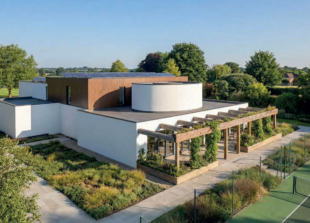
New look: a computer generated image of an enlarged fitness centre and spa at Phyllis Court
Top Articles
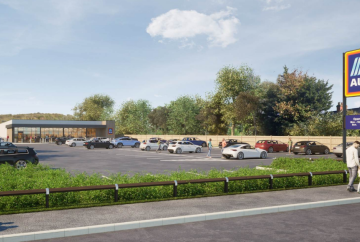
SUPERMARKET chain Aldi has confirmed that it plans to open a new food store in Henley. The Henley Standard revealed in May last year it was looking at the Jewson site, off Reading Road, with the materials firm set to move to the former Gibbs and Dandy...

FAMILIES who spent generations camping on an island in Shiplake are “heartbroken” now that the site has gone on the rental market. Former plot-holders at Shiplake Lock Island say that the Environment Agency, which owns it, have allowed it to...
© Copyright 2024 Baylis Community Media CIC All right reserved