07:34AM, Monday 26 January 2026

A MAN from Stoke Row who was kidnapped by the Germans during the Second World War has celebrated his 100th birthday.
Ches Black celebrated the milestone with two parties last month, one at the sports pavilion in Stoke Row recreation ground and another at St Michael’s Church in Sonning Common.
He has lived in the village for around 50 years and first found himself in the area when, after the war, he was billeted in Highmoor.
Mr Black is a well-known face around the village and it was a common sight to see him riding his tricycle-style bicycle to the Black Horse in Checkendon, before he fell off injuring himself last year.
His late wife June, who he was married to for 72 years, previously ran the village shop in Stoke Row and the couple had four children, Richard, Helen, Victor and Adrian.
It wasn’t until June’s death in 2020 that Mr Black said his memories from his earlier life in Poland began to flood back.
“All of a sudden, my memory comes back when I was about 95 years old,” he said.
“At that time, I started remembering everything. The language, the songs — I can remember all of them.”
Mr Black, who changed his name after moving to England, was born Czeslaw Blachucki on December 10, 1925, in a small village called Gnezdzyska.
When he was about 10 his parents moved to Vilnius, now part of Lithuania, which was occupied by the Germans in 1941.
He described life as “very hard” and recalled making a 40-mile journey to trade items for food.
After Christmas in 1944 the Nazis started rounding up young men and women in Vilnius to transport them to Germany for work.
When the Nazis arrived at his family home, Mr Black, then aged just 19, hid in nearby woods to evade capture.
He said: “They didn’t get me, but they got my mother as a hostage. My father told me I had to go because they had my mother.
“We were taken to a big hall. We sung. We tried to forget the past, what was happening to us.”
Mr Black was then loaded into a cattle wagon with about 40 other people and transported to Berlin.
He recalled the doors of the wagons being left open before departure to let those inside say their goodbyes. It would be the last time he ever saw his mother, who later died in 1947.
Mr Black said: “Some of us tried to get out. They made a hole in the train. But we didn’t think it was worth risking. When they took us to Germany, they let us out and said, if we joined them we will be free. We signed this paper but didn’t know what we were signing because we didn’t understand German”
On arriving in Berlin, Mr Black was taught how to drive a lorry and was forced to work as part of the German transport core.
He recalled being deployed to a building site in Berlin, where he was made to help excavate the land using a wheelbarrow and shovel. It was only after the war when he saw images on TV that he realised he had been digging Hitler’s bunker.
After passing his driving test, Mr Black was then deployed to Italy where he worked transporting timber to the front line.
To avoid being bombed by the Allies, Mr Black had to complete his journeys through the mountains at night without headlights and using only the light of the moon to guide him.
He recalled on one occasion nearly driving off the road but steered into a rock to stop the lorry from slipping.
One day, Mr Black and the men he was stationed with identified themselves as Poles to the local villagers, who told them a Polish division had taken Monte Cassino.
On hearing the news Mr Black left the Germans and headed to the Mountains alone. He managed to join a group of resistance fighters and lived with them for a short while. During this time, Mr Black staved off hunger by killing a sheep and capturing a cow by driving it into a bog.
After waking up one day to machine gun fire, Mr Black said he suspected the Italian farmer had reported the stolen sheep to the Germans.
He then headed towards the front lines in the hope of finding the British forces. Close to the fighting, there was intense artillery fire on all sides. Mr Black came across a Russian man who was hiding alone in the bushes.
The pair hid together until the sun started to go down, and then slowly walked forward to the British lines, where they identified themselves.
Mr Black said: “At night, the shelling stopped. Everything went quiet. So we got to the English and there was a tank division. They gave us tin of corned beef and dry biscuits.”
Mr Black spent the last part of the war with the Polish 5th division, where he served in the 15th battalion, first company.
He saw his first action in Santa Sofia where he found himself in a minefield and a number of men were killed or wounded.
With the medics too frightened to come on to the battlefield, Mr Black lifted a lieutenant who had been shot in the forehead onto a jeep.
Surprisingly, it was not the last time the pair would see each other, and they were briefly reunited after the war while working at a biscuit factory in Reading.
Mr Black said: “When I put him on the jeep, he was half dead. I was working at Huntley and Palmers and I met him there. He didn’t recognise me but I recognised him straight away. They put a bit of metal in his forehead and he managed to survive.”
After the war ended in 1945, the Yalta Agreement, which ceded Poland to the Soviets, meant Mr Black could not return home.
He stayed briefly in Italy where went on an engineering course and then with was brought to Glasgow and then to Highmoor.
During this time, many Polish families were living in Checkendon in a camp built by the Americans which Mr Black would cycle to on his bicycle.
In 1947 he met his wife June at a dance at Stoke Row village hall. She was one of three sisters who all married Polish servicemen.
Mr Black has worked numerous jobs throughout his life, including as a gardener and for 29 years in a car factory in Cowley in Oxford.
To stay fit and active, Mr Black does leg and breathing exercises. His advice to the younger generation was: “Love each other, look after each other and trust each other.”
Most read
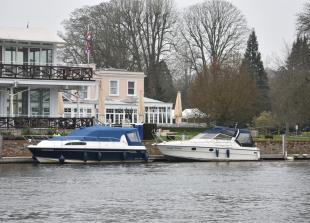
Police cordon on the scene at Phyllis Court Drive
Top Articles
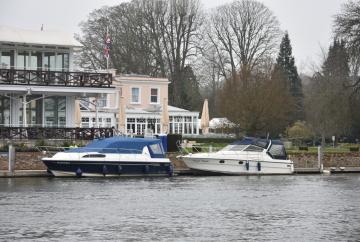
Police cordon on the scene at Phyllis Court Drive
A 44-year-old man from Henley was arrested and remains in police custody following the death of a woman, who has not been formally identified, in Phyllis Court Drive.

The woman who was discovered off Phyllis Court Drive on Friday morning has been identified as Jennifer Symonds.
Police cordon on the scene at Phyllis Court Drive on Friday
A man has been charged with one count of murder following the death of a 44-year-old woman.
© Copyright 2024 Baylis Community Media CIC All right reserved