07:11AM, Monday 26 January 2026

Stock image. Credit: Pixabay
THE number of pupils on free school meals in the Henley area has more than doubled since 2018.
Data obtained by the Henley Standard through Freedom of Information requests analysed trends across state secondary schools in its distribution area.
The increase may come as a result of a number of factors including temporary financial protections that were put in place during the transition away from older benefits to Universal Credit, as well as strains put on finances as a result of the covid pandemic.
The figures cover the period from the 2018/19 academic year through to 2024/25.
This included Gillotts in Henley, Langtree in Woodcote, Maiden Erlegh Chiltern Edge in Sonning Common, Highdown in Emmer Green, Piggott in Wargrave and Icknield Community College in Watlington.
The average increase across all the schools is around 53 pupils and the average percentage increase across all the schools is around 137 per cent. This means that the number of pupils on free school meals has, on average, increased by more than double and, in the majority of schools, the uptake has steadily increased throughout the years.
The increase in uptake in and around Henley is in line with wider national trends.
A House of Commons research paper on food poverty, published in July last year, found that in January 2025, there were around 2.2 million pupils who were eligible for the benefit, representing 25.7 per cent of state-funded pupils.
The paper found that this eligibility rate has increased particularly sharply in the last few years (since 2018) and is the highest rate recorded since the current time series began in 2006.
The research briefing said that this increase could be driven by many factors, including “macro-economic conditions the coronavirus pandemic and the continued effect of the transitional protections during the rollout of Universal Credit.”
From the start of this year, the Labour government further widened the eligibility criteria so that every pupil whose household is on Universal Credit has an entitlement to free school meals.
The government says that this move will lift 100,000 children across England completely out of poverty.
Since 2018, children have only been eligible for free school meals if their household income is less than £7,400 per year.
Figures obtained by the Henley Standard from school census data found that the largest increases in uptake were seen at Icknield Community College and Langtree school.
Langtree School saw the number of pupils on free school meals more than triple from 19 in 2018/19 to 59 pupils in 2024/25. An increase of 211 per cent.
At Icknield Community College the number of pupils on the benefit nearly tripled, rising from 37 in 2018/19 to 106 in 2024/25. An increase of 186 per cent.
At Gillotts School in Henley, the uptake in free school meals more than doubled from 36 pupils receiving the benefit in the academic year 2018/19 to 94 pupils in 2024/25.
This marks an increase of nearly 162 per cent. Maiden Erlegh Chiltern Edge School also saw its figures more than double.
In 2024/25 94 pupils were on free school meals compared with 44 in 2018/19, an increase of 115 per cent.
The lowest increases were seen at Highdown School and Piggott School.
From 2018/19 to 2024/25 Highdown School saw the uptake in free school meals increase from 78 pupils to 138, a 77 per cent increase.
At Piggott School, across the same period, the uptake increased from 59 pupils to 102 in an increase of about 73 per cent, or just under three-quarters of what it was in 2018/19.
What do you think? Write to: Letters, Henley Standard, Caxton House, 1 Station Road, Henley or email letters@henleystandard.co.uk
Most read
Police cordon on the scene at Phyllis Court Drive
Top Articles
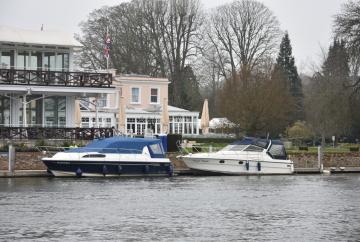
Police cordon on the scene at Phyllis Court Drive
A 44-year-old man from Henley was arrested and remains in police custody following the death of a woman, who has not been formally identified, in Phyllis Court Drive.

The woman who was discovered off Phyllis Court Drive on Friday morning has been identified as Jennifer Symonds.
Police cordon on the scene at Phyllis Court Drive on Friday
A man has been charged with one count of murder following the death of a 44-year-old woman.
© Copyright 2024 Baylis Community Media CIC All right reserved